
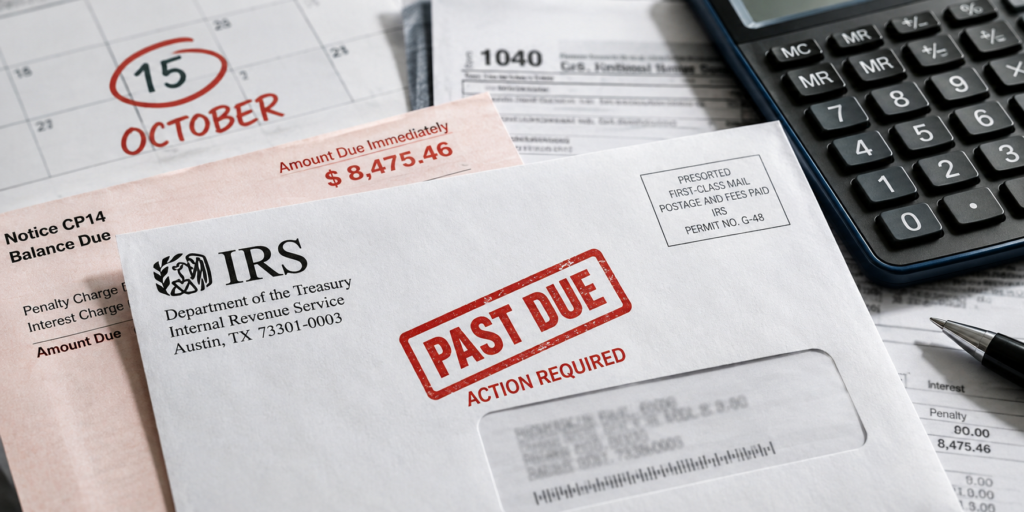

Millions of Americans still haven’t filed their tax returns, and time is running out. October 15 is the final deadline of the year — and according to tax professionals, the penalty for missing it is bigger than most people realize.
Here’s what catches people off guard: owing money isn’t actually the expensive part. Taxpayers who owe but pay late are charged 0.5% of their balance per month. Taxpayers who don’t file at all face a much steeper penalty — 5% per month, up to 25% of what they owe. That’s 10 times worse, just for not filing the paperwork.
“People assume the debt itself is the problem,” said one tax resolution specialist familiar with these cases. “In reality, not filing is what costs the most. That penalty grows a lot faster than anything tied to the amount owed.”
Do You Qualify For the IRS Fresh Start Program? →
That distinction matters most for taxpayers who already have back tax debt and have been avoiding filing because they can’t pay in full. But filing on time — even without a payment — avoids the bigger penalty and keeps the door open for IRS relief programs.
What relief options are available
The IRS’s Fresh Start Program offers a few paths for taxpayers who owe money but can’t pay it all at once:
Offer in Compromise — Settle the debt for less than the full amount owed
Installment Agreement — Turn the balance into structured monthly payments
Currently Not Collectible Status — Put a temporary hold on collections for taxpayers facing real financial hardship
Eligibility rules have loosened in recent years, so taxpayers who were denied in the past may qualify now.
Check My Eligibility For Free →
Why timing matters as much as the balance
Tax professionals point out that two people with the same tax debt can end up in very different positions, depending on when they act. Someone who files by the deadline and sets up a payment plan avoids the fast-compounding failure-to-file penalty. Someone who keeps putting it off watches that penalty pile on top of a balance that’s already growing.
Taxpayers with an unfiled return or existing back tax debt can check their eligibility for IRS relief programs through a short assessment that takes about a minute. There’s no payment required and no obligation to move forward.
See What You May Qualify For →
Find Out if You’re Eligible
If you owe back taxes or have unfiled returns, we can match you with a vetted tax professional who handles cases exactly like yours. Take the free Tax Relief Assessment now to see what you qualify for and get a free consultation.
- Answer a few questions about your finances
- Qualify and be presented with a resolution
- Enroll in the Fresh Start Program
It only takes 2 minutes to see if you qualify. Click here to be connected with a verified partner.