
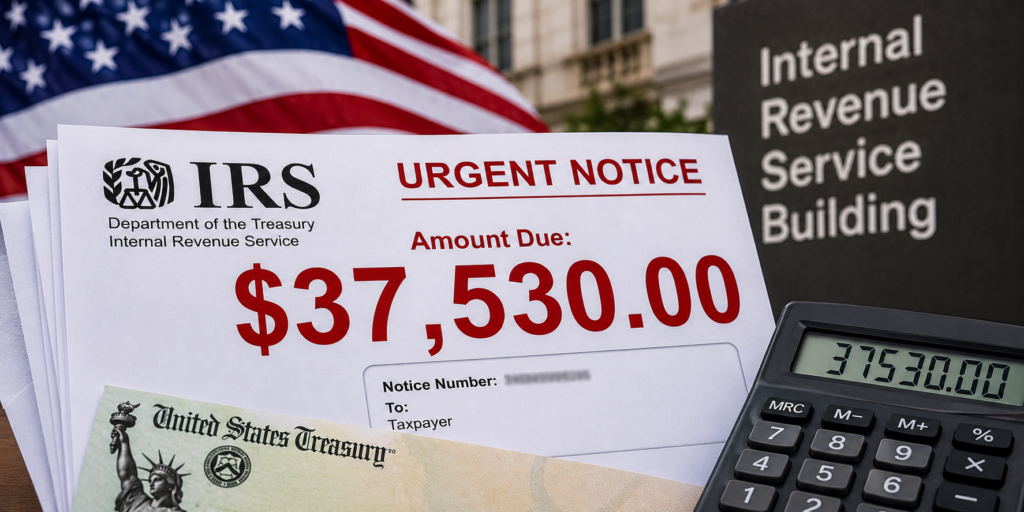

Picture the moment the notice arrives. Someone comes home from a long shift, opens a letter from the IRS, and sees a number five figures long — money they don’t have. More letters follow. Then a bank account gets frozen. Then the thought that once felt impossible — losing the house — starts to feel close.
That fear is more common than most people realize, and so is the way out of it. Since 2011, a set of IRS policies known as the Fresh Start initiative has helped taxpayers in exactly that position resolve debts that once felt permanent. Ask any licensed tax professional who works these cases, and they’ll tell you the same painful thing: almost none of their clients had ever heard of it before the crisis forced them to go looking.
See If You Qualify for the Fresh Start Program ->
A Program the IRS Has Never Tried to Publicize
There’s a reason so many people find out about relief only after they’re already frightened. According to the IRS’s own most recent projections, Americans fail to pay roughly $606 billion in taxes on time every year, even after everything eventually recovered through late payments and enforcement. Against a number that large, the agency’s priority is collection — not making sure every taxpayer in distress knows their options.
Fresh Start itself arrived quietly, folded into a stretch of IRS collection reforms in 2011 and 2012. No announcement, no campaign — just policy changes buried in IRS publications that widened access to relief tools that already existed. Those changes are now a permanent, ordinary part of how the IRS handles collections. But “ordinary policy change” isn’t something anyone puts on a billboard, and the silence has a human cost: people lying awake at night over a problem that, in many cases, has a real and reachable solution.
“People come to me owing six figures who’ve never heard the term Offer in Compromise,” is something you’ll hear from almost any enrolled agent who works this caseload full-time. “They’ve spent months believing they’re out of options, when they aren’t.”
Check Your Eligibility in 60 Seconds ->
Four Paths, Not One Program
Fresh Start isn’t a single form or application — it’s an umbrella over several distinct relief mechanisms, and which one fits depends on the specifics of a person’s situation:
Offer in Compromise. The option most people picture when they imagine “settling for less.” It allows a taxpayer to resolve their full balance for a reduced amount, based on what the IRS determines they can realistically pay. It’s also more selective than most advertising admits: in fiscal year 2025, the IRS accepted 5,464 of the 38,797 offers submitted — about 14%. Filing costs $205 plus a required down payment (both waived for taxpayers at or below 250% of the federal poverty line), and it only works when someone’s finances genuinely support it. For the people it does work for, it can mean the difference between years of dread and a debt that’s finally, actually over.
Installment agreements. For people who can pay over time but not all at once — which describes a lot of families trying to hold things together. Fresh Start expanded eligibility and simplified the process: balances up to $50,000 can now be set up online, with terms as long as 72 months, and a modest setup fee that’s waived for low-income filers.
Penalty abatement. Penalties and accrued interest can grow larger than the original debt, turning a bad problem into a much worse one. Taxpayers with a clean recent compliance history, or a genuine hardship, can often have a meaningful share of that weight lifted.
Currently Not Collectible status. For people in real financial distress — the kind where every dollar already has somewhere urgent to go — this pauses IRS collection activity entirely. No levies, no new garnishments, while they get back on their feet.
Why the Silence Makes Sense (For the IRS)
Taxpayers with unfiled returns often make one costly mistake:
They keep waiting.
Some are afraid that filing old returns will immediately make their situation worse. Others simply don’t know where to start.
But unresolved returns can make it harder to address existing IRS debt.
Getting back into filing compliance is often an important step toward pursuing a resolution.
So even if you haven’t filed in several years — or you’re missing old tax documents — you may still have a path forward.
See Which IRS Options May Be Available to You ->
What the Process Actually Involves
There’s no shortcut around documentation, but there is a clear, walkable path. Specialists generally guide people through the same sequence:
- Pull together a complete tax record — every return, notice, and piece of IRS correspondence for the years owed.
- Document current finances: bank statements, pay stubs, asset values, and several months of expenses.
- Calculate realistic ability to pay using the IRS’s own collection-potential formula, rather than guessing or hoping.
- Match the situation to whichever Fresh Start provision actually fits — not the one that sounds most appealing.
- File through a licensed specialist who can represent the case directly to the IRS, so no one has to face it alone.
- Keep records of every document and communication, since the IRS can request more at any stage.
The Cost of Waiting
None of this is easy to face. But the families and business owners who put it off longest are almost always the ones who end up with the fewest options. A debt that feels heavy today can become genuinely crushing a year or two from now — while the same debt, addressed now, might still be within reach of relief.
The earlier someone reaches out, the more room there still is to breathe.
Find Out if You’re Eligible
If you owe back taxes or have unfiled returns, we can match you with a vetted tax professional who handles cases exactly like yours. Take the free Tax Relief Assessment now to see what you qualify for and get a free consultation.
- Answer a few questions about your finances
- Qualify and be presented with a resolution
- Enroll in the Fresh Start Program
It only takes 2 minutes to see if you qualify. Click here to be connected with a verified partner.
Get Your Free Eligibility Check →